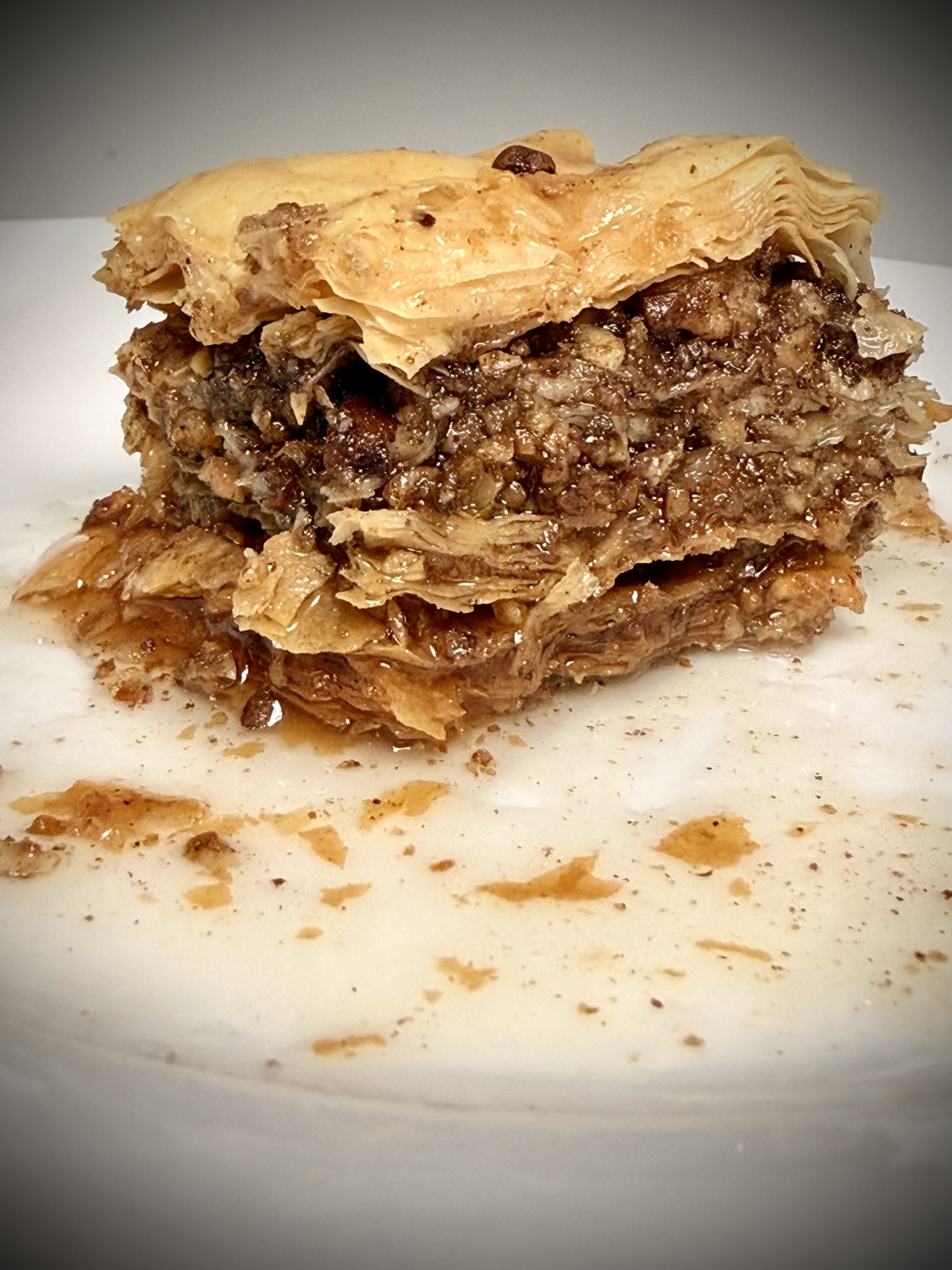

I love baklava! Greeks love baklava. In fact, the whole of the Balkans and the Middle East loves baklava. Even better is that everyone I speak to loves baklava!!!
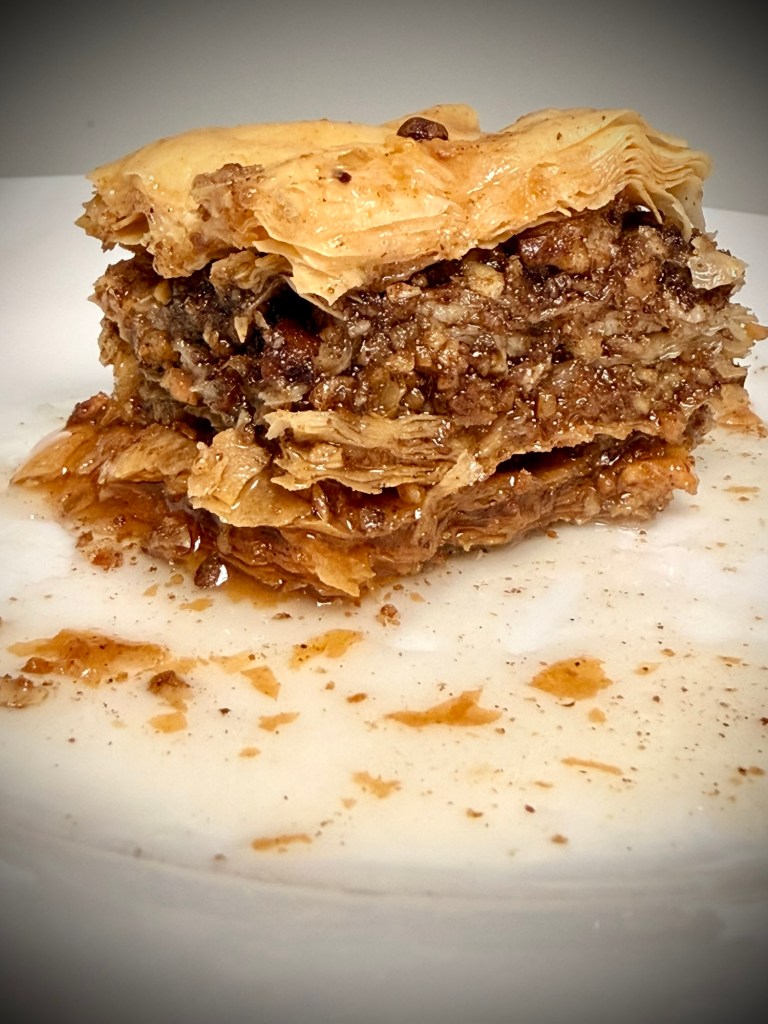
Did you know that baklava’s roots trace all the way back to Ancient Greece — as far back as Minoan Crete around 3100 B.C.? An early version of the dessert was known as gastrin or gastris, and later koptoplakous during the Byzantine era.
These early pastries were made with layers of thin dough, honey syrup, nuts, and warming spices — remarkably similar to the baklava we know today. Ancient versions often included walnuts, almonds, hazelnuts, sesame seeds, poppy seeds, and even black pepper. According to ancient Greek writer and culinary expert Chrysippus of Tyana (modern-day Cappadocia), these sweet layered pastries were already beloved centuries ago. His works were quoted by the 2nd century writer Athenaeus.
The name koptoplakous comes from the Greek words kopto (“to cut”) and plakous (“flat” or “broad”), referring to the dessert being cut into pieces before serving.
While the dessert evolved over many centuries and cultures, the word baklava itself first appeared during the Ottoman Empire in the 16th century.
Ingredients:
For the Syrup
3 cups sugar
1 1/2 cups water
1 cinnamon stick
3 cloves
Juice of 1 lemon & lemon peel
1/4 cup of Greek honey
1 package no. 4 phyllo pastry
2 sticks of melted butter
For the filling
3 cups of roasted mixed nuts (walnuts, almonds, pistachios, hazelnuts)
2 tbsp cinnamon powder
1 tsp ground clove
1/2 cup plain breadcrumbs
1/4 tsp salt
1 tsp granulated sugar
Directions:
I used a 9×13 pan.
Always start by making the syrup. In a medium sized pot, stir the water and sugar together and set on the stove to medium. Add in the lemon peel, juice, cinnamon stick and cloves. Bring to a simmer till the sugar is dissolved and the liquid is clear. Turn off the heat and stir in the honey. Set it aside to cool.
I like to lightly roast my nuts for a 10 minutes at 350 F. It enhances the flavors. When they have cooled off, roughly chop them up. You should have a mixture of sizes in this type of baklava. Some a little more chunky and others more fine.
Mix the nuts with the cinnamon, clove, and breadcrumbs. Why breadcrumbs? Because nuts cannot absorb syrup, but breadcrumbs certainly do! It’s a secret ingredient that helps the syrup gush into your mouth when you bite into it!
Cut the phyllo to fit your pan. You will use the sheets that fit perfectly into the pan on the bottom and the top. The cut out scraps are for the filling.
Melt the butter on low.
Layer 6 sheets of phyllo in the buttered pan. Drizzle butter between the sheets. Add a layer of nuts. Add another 3 sheets. More nuts. And keep going. At the top, you want another layer of 6.
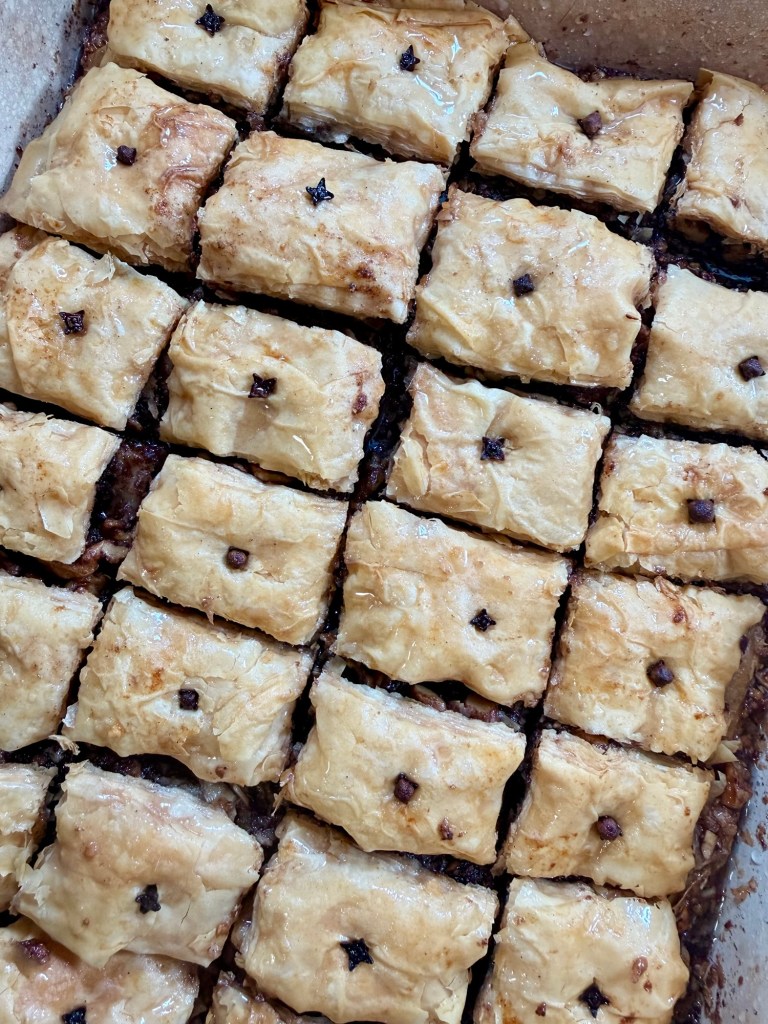
Brush only the top sheet with the butter. Score it however you like. I made squares.
We Greeks often add a clove prong both as an aromatic and decorative. It is edible, or simply remove it.
Pour the rest of the butter on top & sprinkle with water.
Bake at 300 F for an hour and lower to 270 F for another 90 minutes. Because this one has sp many layers, it’s important for a low & show bake so that every sheet comes out crispy!!!
When baked, ladle all of the syrup over the baklava. And let it sit for a few hours so that e writhing gets absorbed! I often make baklava the night before and in the morning it’s perfect!
Kali Oreksi!

